
How to prepare for Holi in India: What to wear and what you’ll need
Away With Wonder contains affiliate links. This means that if you chose to make a purchase via one of the links I’ve provided, I may earn as small commission at no additional cost to you. See my Disclosure Policy for more information.
Are you heading to India for one of its most vibrant festivals? Then you’ll need to know how to prepare for Holi in India.
Picture this: Vibrant powders are being peppered into the air and are swirling around you. You exchange “Happy Holi” greetings with strangers and add new splashes of colour to each other’s faces. You’re completely lost in a sea of people amongst the joyful chaos when an unexpected water balloon catches you off guard and bursts on your back.
The beat of music echoes through an insanely large crowd of people dancing. That’s how I’d paint my experience of celebrating Holi in India – a festival that’s been on my bucket list for years.
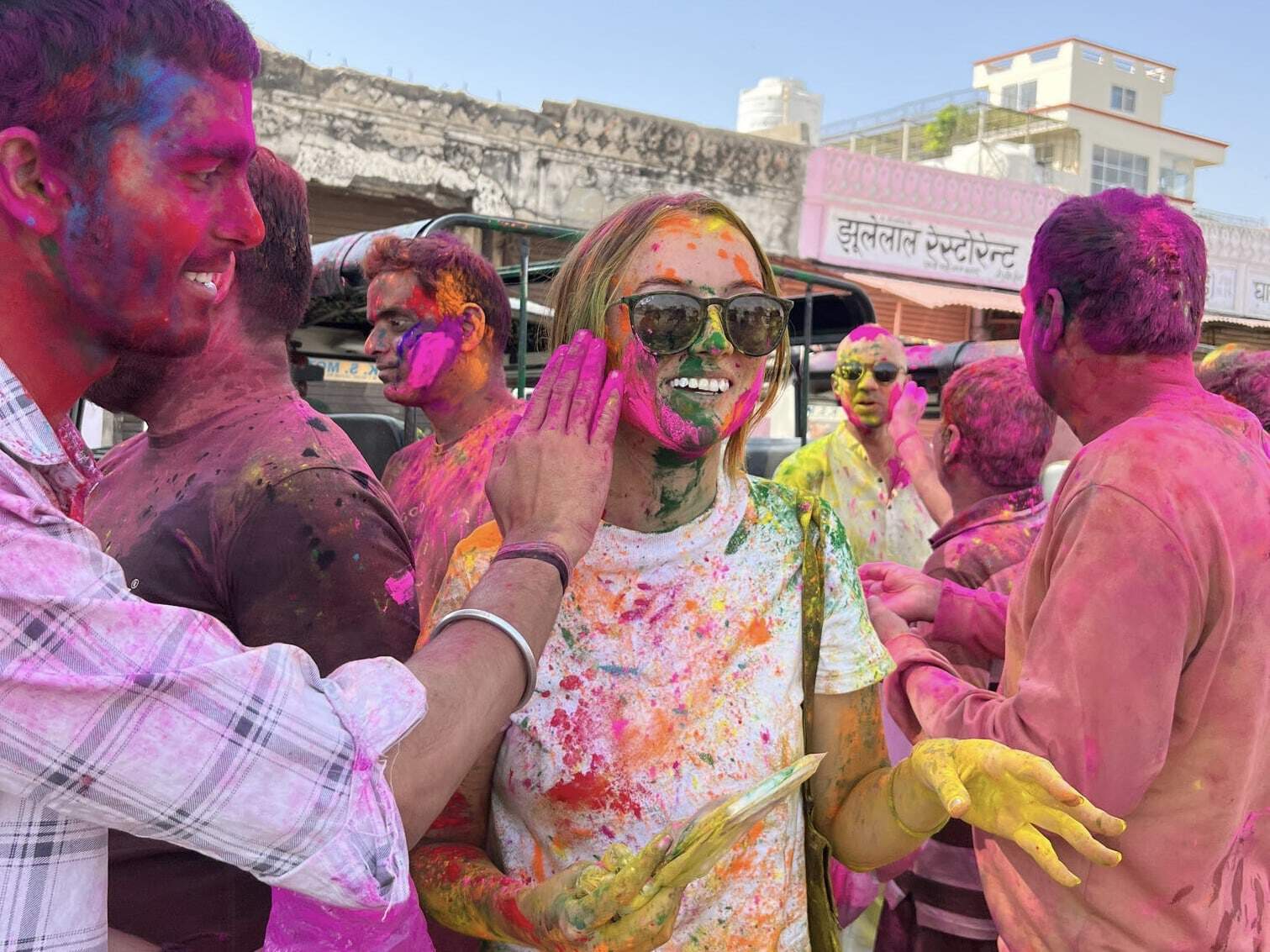
Now, given how long I’d hoped for years to experience Holi in India, you’d think I’d come prepared. Instead, my beige bra was turned bright green; my baby pink shellac nails sported a splattered design of Holi colours; and my ashy-blonde hair took on a sunny yellow hue. I became a canvas for the kaleidoscope of Holi colours beyond my expectations.
I have to say, I’m glad you’ve found this post because by reading the tips, you’re going to be SO much more prepared than I was for the vibrant chaos of Holi in India. A hopefully, at least one of us (not me) can make it out unstained!

What is Holi?
Before I get into what to wear and what you’ll need to prepare for Holi in India, let me start with a quick background on the festival for those who might not yet be familiar. Holi, also known as the Festival of Colours, is a vibrant Hindu festival celebrated in India – as well as Nepal.
Holi marks the arrival of spring and the triumph of good over evil. It’s celebrated on the first full moon of the Hindu luni-solar calendar (which varies each year). People come together to play with coloured powders, flower petals, water balloons, and water guns. It’s a time for forgiveness, renewal and the spreading of love and happiness – a magical, joyous festival to experience.
When is the next Holi Festival date in India?
Fri, 14 Mar 2025
What to wear for Holi (and what not to wear!)
Clothing
When you’re choosing what clothes to wear, white or light-coloured clothes are ideal, as they will showcase the vibrant hues of Holi colours. White is a very common colour for people to wear for this reason. But I’d recommend wearing clothing that you don’t mind getting ruined by colour.
If you’re travelling to India during Holi, you can either bring clothes that you don’t mind getting stained from home or head out to the local markets in India for something to wear once you’re there. Definitely don’t wear anything expensive or delicate!
Clothes made from synthetic materials such as polyester or nylon seemed to be easier to clean and less likely to absorb colour stains, compared to natural fabrics like cotton. However, cotton is a lot more breathable!
Many people opted for long, loose fitting pants and long-sleeve tops to minimise the direct contact with colours and their skin. (Just a heads up that the colour may still manage to get in places you didn’t want it.)
I wore a loose white t-shirt that was similar to this one, which has a crew neck and is flowy. I wore pants that I’d bought from the Jaipur market, which were similar to this style, but mine were pattern as that’s all they had.
Underwear
I wish I’d know this before, but the same goes for underwear – wear something you don’t mind getting ruined by colour or opt for dark underwear because as I mentioned the colour can get EVERYWHERE! It’s also been quite difficult to remove the colour from lighter garments.
Eyewear
Sunglasses were a lifesaver – although, on occasion the colours would get behind them. You’ll want to have some sort of shield for your eyes from coloured powder and water balloons – whether that be sunglasses, googles or other protective eyewear. This will also help prevent irritation and potential damage to your eyes.
Face Mask or bandana
For added protection from the Holi colours, use a face mask or bandana to cover your mouth. Holi colours can cause irritation and discomfort if they are inhaled.
Hair scarf or hat
Aside from wearing your hair up in a bun, braided or plaits, a hair scarf or hat are additional options for helping to keep colour out of your hair. I even saw one person wearing a shower cap.
Footwear
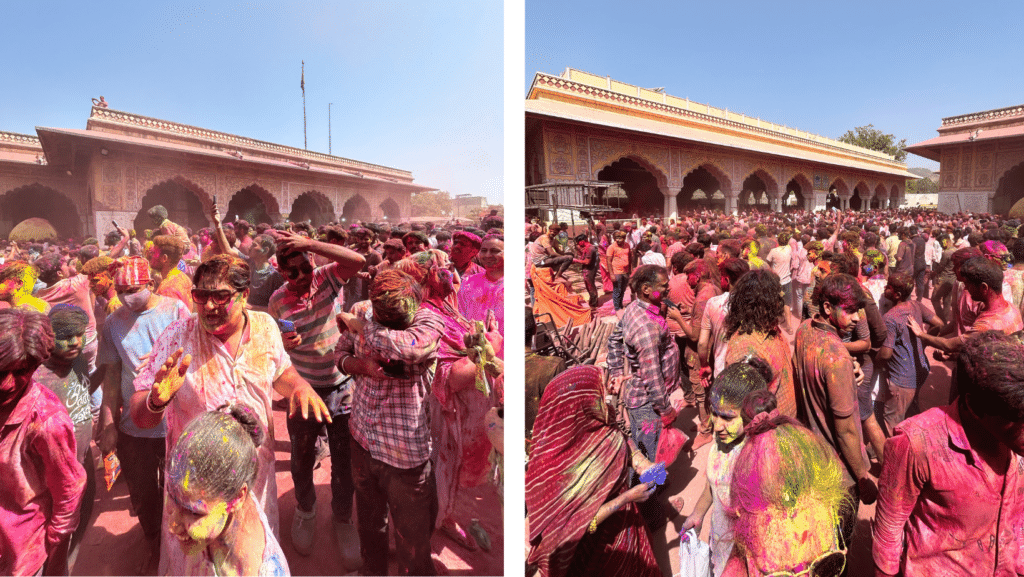
Wear closed-toe shoes or waterproof sandals to protect your feet from colour powder and debris. Some areas during Holi get extremely crowded and you may end up like a sardine in a tin can – there were so many lost shoes on the floor so ideally wear something that’s not going to slip off your foot.
A lot of the time, there was no way you’d be able to bend down to pick it up because you’d be putting yourself in a situation to be stepped on. Avoid wearing expensive or delicate shoes that you wouldn’t want to get stained, damaged or lost among the sea of other lost shoes.
In summary, you’ll need:
- Top (that you don’t mind getting stained)
- Bottoms (that you don’t mind getting stained)
- Underwear (that you also don’t mind getting stained)
- Sunglasses or other protective eyewear
- Face mask/ bandana (optional to help keep colour out of your nose and mouth)
- Hat/ hair scarf (optional to help keep colour out of your hair/ off your scalp)

How to protect your skin and hair during Holi
Skin
This is an important one: GET COCONUT OIL, PUT IT EVERYWHERE AND PUT A LOT ON. Don’t forget your face and all the places where your clothes cover you. Not only will it make it easier to wash the colours off later, but it’s crucial to protect your skin from any potential chemicals present in some synthetic colours people may use.
I’d also suggest a waterproof sunscreen with a high SPF. A lot of the celebrations are outdoors and alongside coloured power, we were hit with water balloons, buckets of water and water guns so you’ll want a hardy sunscreen.
Hair
COCONUT OIL! To shield your hair from damage and absorbing colour, apply a generous amount of coconut oil beforehand. This will create a protective barrier and make it easier to wash out the colours later. (I wish I’d put more in my hair. While my light hair still held onto subtle yellow tones, those who didn’t use the oil still had vibrant multicoloured hair when we left India almost a week later.)
Along with the oil, tie your hair up in a bun, plait or braid it to help prevent tangling and too much colour getting into your hair. You can also wear a hat, scarf or bandana to protect your scalp and hairline.
Keep in mind that blonde hair (especially dyed blonde hair) will likely absorb more colour than undyed hair, while colours will just be less prominent in darker hair. My dyed blonde hair seemed to absorb the yellow tones more than anything else, which possibly could’ve been fixed by some purple shampoo.
Nails
The Holi colours get absolutely everywhere, including nails. To prevent colour from seeping into your nails and causing stubborn stains, apply a coat of nail polish (clear or coloured) before playing Holi. This will create a protective barrier and make it easier to clean your nails afterward.
If you’re a Shellac nail polish girlie like me, I found out that the polish seems to absorb colour. I had a light pink colour on my toes and clear on my hands, which both retained colour from Holi. If this is a concern for you, I’d recommend opting for a darker colour shellac. And coconut oil up those cuticles! *
*If you can’t use coconut oil or other oils, I would suggest looking into another sort of lotion that will act as a barrier.

Essential items to pack for Holi
Phone
If you want to get photos during Holi, definitely bring your phone along. But, you’ll want to make sure your phone is protected from the colours and water, and keep it secure!
Waterproof phone case
A waterproof case or pouch will protect your mobile phone from dust and water damage during Holi celebrations. Alternatively, if you don’t have a waterproof them, a zip-lock bag will provide some protection from water and colours.
Didn’t pack a waterproof case? A few of the group members on my tour mentioned they saw lots of plastic phone pouches being sold in the Jaipur markets.
Wet wipes
Pack some biodegradable wet wipes or baby wipes in your bag to quickly and easily remove colour from your skin and face during Holi celebrations.
Water
Holi celebrations can be energetic and you’ll probably be outdoors in the heat, so it’s really important to stay hydrated and drink water when you can. If you’re getting water while you’re out during festivities, opt for bottled water or sealed beverages to avoid consuming contaminated water during the festivities.
Holi colours
Holi colours, also known as gulal, are a huge part of the festival, and is the colourful dust used to smear on faces and tossed around.
If you’re travelling on a group tour like I did, either your tour guide will likely sort colours for you at a cost, or you can purchase Holi colours at markets.

Removing the Holi colours
Shower in cold to lukewarm water
If you’ve used coconut oil, you’ll likely find most of the colour will come off after a cold to lukewarm shower. However, you may find stubborn residual colour remains in areas where coconut oil wasn’t used.
Use cleanser or make-up remover
I found my make-up remover helped with gently removing some of the stubborn colour on my face.
If all else fails… sweat it off.
And see next section… haha
After care tips for post-Holi
Now that we’ve covered how to prepare for Holi in India, there’s also a few post-Holi tips that you’ll want to know:
Residual colour
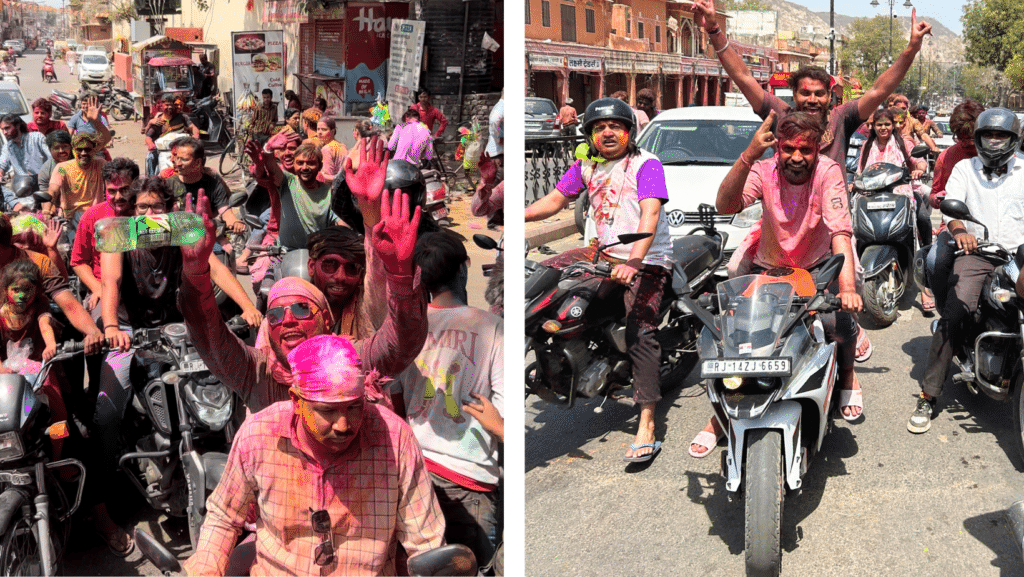
If you have colour on your skin after showering, keep in mind that it will sweat off. So any clothes and accessories that you wear while colour is still on your body might get stained. I opted for black or darker clothes until the colour finally came off within a few days.
Condition & moisturise
My skin and hair were very dry after Holi so leave-in conditioners for your hair and a good body moisturiser are a good idea to have for after care. You can easily find body moisturiser there and I always travel with Olaplex No.6, which is a leave-in hair moisturiser and strengthener.
Frequently asked questions
What do I wear in India?
India tends to be quite conservative. When deciding what to wear in India, as a general rule, it’s best to cover your shoulders, chest, and knees when travelling in India as a woman. This will help you blend in and avoid any unwanted attention.
I would advise dressing conservatively during Holi celebrations, but wearing clothes you don’t mind getting stain or, potentially, ruined.
Did you feel safe during Holi celebrations?
I felt relatively safe during the Holi Festival celebration, but I do think a lot of that was due to the fact I was on a group tour with G Adventures and had an exceptional tour leader.
Holi brings lots of people to the bigger cities so the celebrations are extremely busy with people. It’s not uncommon for women to be the target of groping.
The one thing that I wasn’t prepared for was being shoulder-to-shoulder in a human tide of people, where you couldn’t move in a different way other than along with the crowd when exiting the temple, where we’d just played Holi. Even sardines in a tin can would’ve had more wiggle room!
If you lost a shoe, I wouldn’t dare suggest you try picking it up as I’d fear the wave of people would just keep moving, right over the top of you.
Where is the best place to celebrate Holi in India?
Our group tour was in Jaipur for Holi – and, while busy, I felt relatively safe here. There were lots of celebrations in the city, and throughout the streets. There’s also heaps to do and see in Jaipur, including Amber Palace, Hawa Mahal, Patrika Gate, and much more.
I’ve only celebrated Holi in India once, so I can’t compare places.
Viator (my go-to company for booking activities and tours) offer a variety of day tours in different Indian cities that help you experience Holi Festival with the comfort of being on a group tour.
Something else you’d like to know about how to prepare for Holi in India?
I’d love to hear from you if any questions about the post about how to prepare for Holi in India. As always, you’re welcome to leave any thoughts or questions in the comments below and I will do my best to answer you. Or feel free to send me a message via my contact page.
Trip Planning Resources
eSIM Card
After years of hunting for local SIM cards or paying hefty roaming fees, I finally switched to Airalo eSIMs for my recent trips to India and Thailand – and it’s been a total game changer. As a solo traveller, having immediate connectivity upon landing gives me a comforting sense of security.
Travel Money Card
Over the years, I’ve tried several travel cards, but my go-to is Wise. It offers excellent exchange rates and is super convenient to reload with options like ApplePay, bank transfer, debit card, or credit card. Plus, it’s a Visa card, which came in handy when travelling to places like Tanzania, where many ATMs didn’t accept MasterCard.
Tours and attractions
Over the years, I’ve booked most of my tours and tickets through Viator (unless I’m booking directly with local vendors or at the attractions themselves). Recently, I’ve started exploring GetYourGuide as well. Both websites offer a fantastic range of tour options, and since they sometimes have different selections, it’s definitely worth checking out both.
Accommodation
For over 10 years, I’ve been religiously booking my accommodation through Booking.com – it’s my go-to platform for keeping all my trip’s hotels and hostels organised in one place.
