
28 MUST-KNOW safari tips for East Africa
Away With Wonder contains affiliate links. This means that if you chose to make a purchase via one of the links I’ve provided, I may earn as small commission at no additional cost to you. See my Disclosure Policy for more information.
Planning your first safari in East Africa? Among the excitement of thinking about all the incredible wildlife you’ll be spotting on your trip, there’s also some careful planning that needs to happen to ensure you’re prepared for your adventure.
From what to pack to managing expectations and capturing those once-in-a-lifetime memories, this post is packed with my top safari tips to help you prepare for your first East African adventure — based on my own experience as a first-timer.
Table of Contents
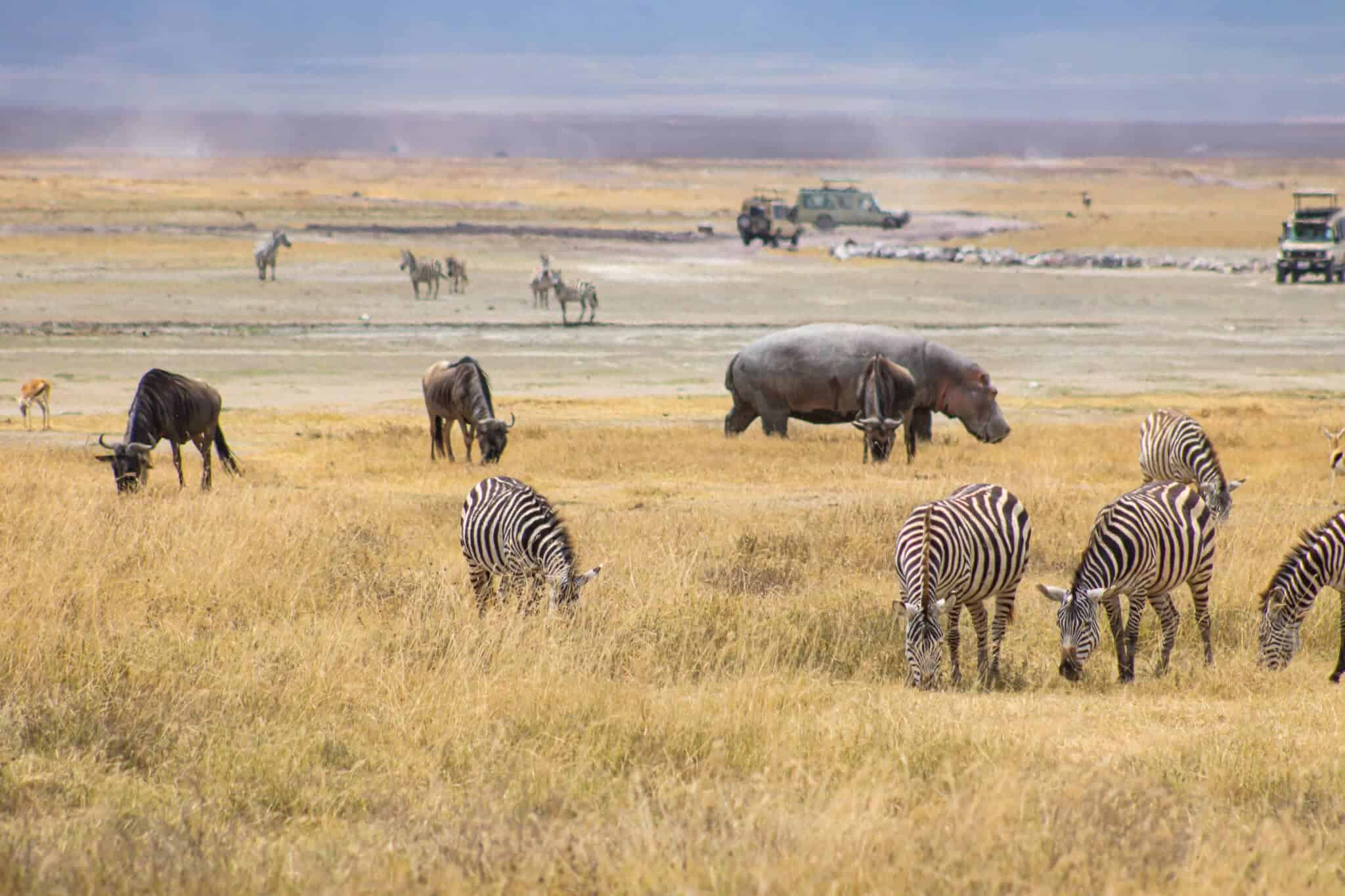
Tips for planning and booking your safari
Join a group tour run by a reputable brand
As a solo traveller, visiting Tanzania and Kenya for the first time, for an adventure safari trip, going a group tour took away so many of the anxieties I had about organising logistics (from safaris to park fees to accomodation to border crossings) and travelling to two new places as a solo female traveller. I would recommend taking a look at the tours run by Intrepid Travel or G Adventures, and if you want to know more about the East Africa Highlights tour I joined you can read about here.
Best time to go
The best time to go, specially to Kenya and Tanzania, would be during the dry season which runs from June to October. During this time is when the Great Migration occurs, so you’ll have a chance to witness the natural phenomenon if your dates line up. I went in September and caught the tail end of the migration, where the zebras and Wildebeest had already crossed the Mara River into Kenya.
Tips for preparing for your safari
Pack light and smart
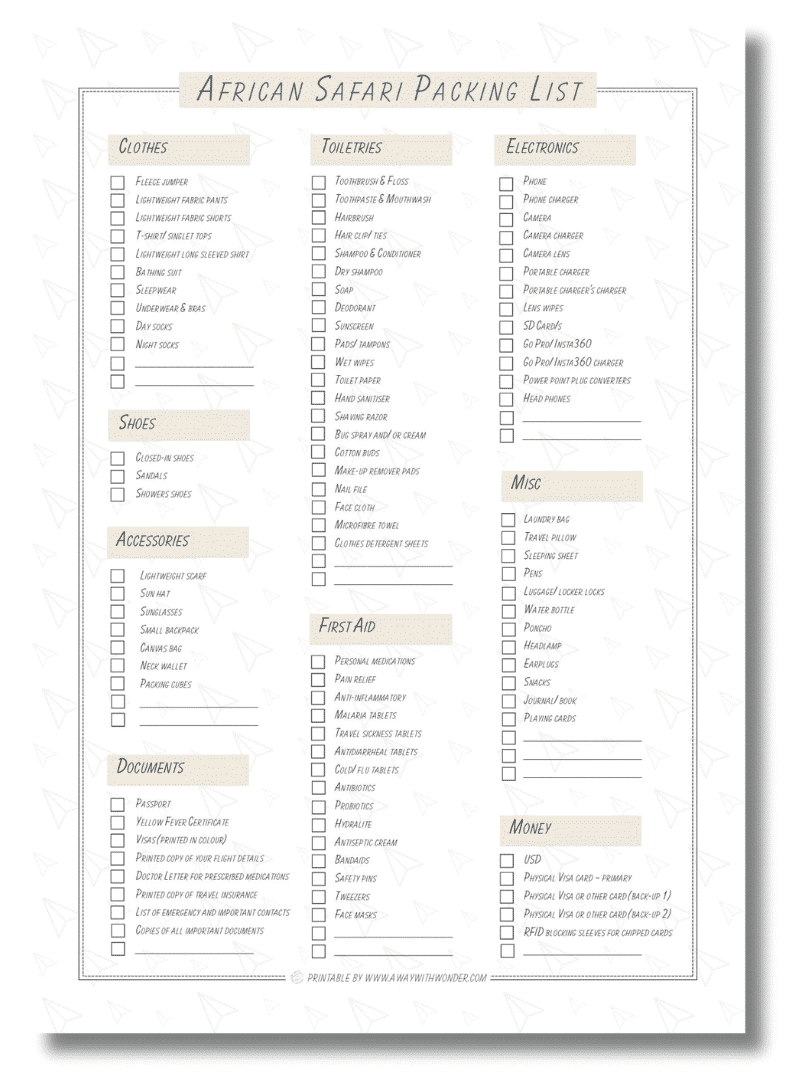
You want to pack so that you’re well-prepared but not too overloaded as most safaris vehicles and bush flights have strict luggage limits. Pack using packing or compression cubes; prioritise practical options over nice-to-haves; choose multiple-functional clothing and know that there’s laundry services are available at many lodges or accomodations – and it’s fairly inexpensive. You can read my suggested packing list here.
Understand visa and other entry requirements well in advance
Visa and other entry requirements can change often – and some requirements need to be completed within a certain timeframe of your arrival into certain countries. Be sure to check and keep updated with requirements when you’re planning your trip and up until you leave. Some resources for information are Travel Sherpa and, for Australians, Smartraveller.
Check your Government’s website for up to date travel advice
It’s really important to stay up to date with current advice about the destinations you’re travelling to – so always check and refer back to your country’s government advice. For Australians, you can refer to Smartraveller.
Purchase travel insurance
While we can prepare as much as possible, sometimes things don’t go to plan and it’s really important that we have things, like travel insurance, in place when this happens. I personally never travel without it.
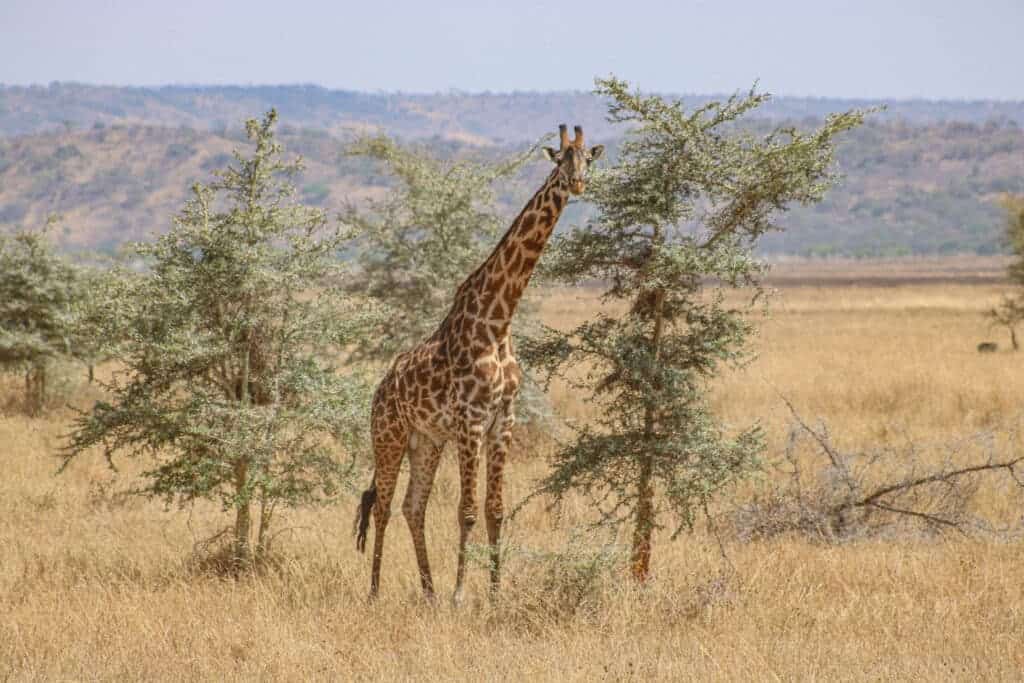
Tips for what to wear
Research the climate and weather during the time you’re visiting.
You’ll want to research the weather during the time you’re going on safari to ensure you prepare and pack appropriately. For instance, if you travel to Kenya and Tanzania during the dry season, you’ll experience cool morning where you’ll need a light jacket (I took a zip fleece), whereas if you travel during the wet season, you might want to packet a light, waterproof jacket instead.
Pack clothes that layer well and are versatile.
Packing clothes that are versatile and can be layered is the best way to go for your safari trip. I went on my safari in September and the weather was inconsistent, which meant dressing in layers was easier enough to take a layer off or put an extra one on.
Don’t pack anything camouflage and avoid white, blue or black clothing.
There are a few different reasons why you should be careful about what colours and prints you pack for trip. Wearing camouflage is actually illegal in some countries in Africa and is reserved strictly for military personnel. White clothing should just be avoid because safaris are very dusty – and your clothes won’t stay white for long. Blue and black clothing should be avoid in areas where tsetse flies are prevalent as they are attracted to those hues – and the flies themselves carry a disease that’s transmitted through their bite, which you’ll want to avoid at all costs.
Want to know more about what to wear on your safari? You can read my extensive guide on what to wear (with outfits ideas) here.
Tips for what to pack
Portable charger
A portable charger is an absolute must for this kind of trip! Not only are you out on game drivers for many hours at a time or likely travelling overland (possibly with or without onboard charging facilities), but access to power to charge your electronics at accommodation can be unreliable. A portable charger is a great back-up to ensure your electronics can be charged at any point.
Headlamp
A headlamp (or small torch) is going to come in very handy for any parts of the trip where you’re camping or walking around your accomodations at night (especially when you get up from your tent to find the bathroom).
Want to know more about what to pack for your safari? You can read my extensive guide on what to pack here.
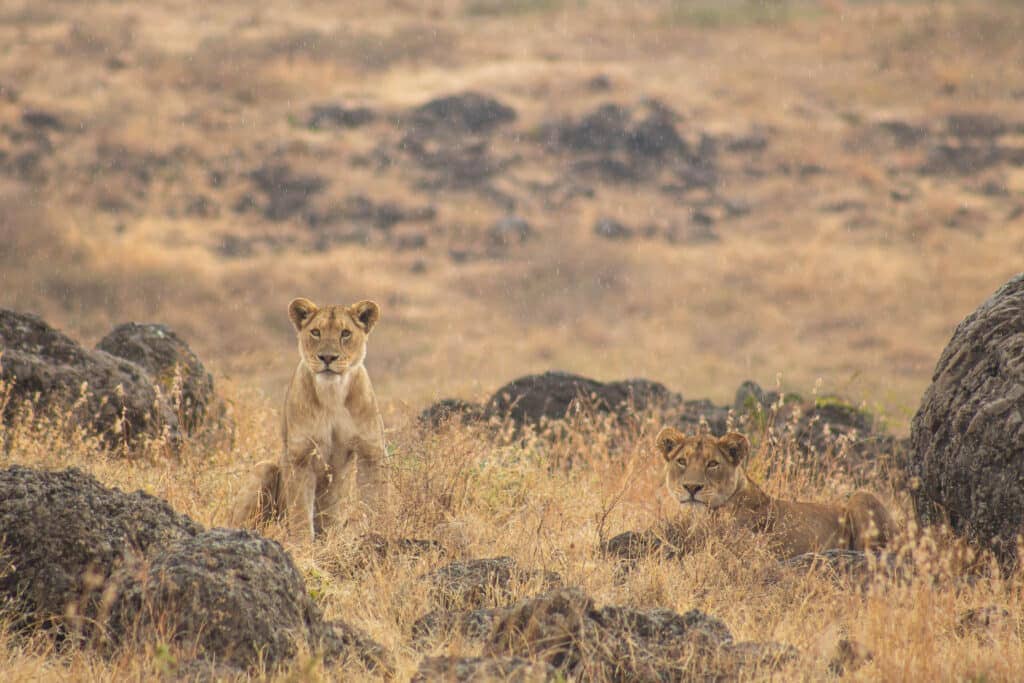
Tips for what to leave at home
Drones
Unless you’ve secured permits, you’ll likely want to leave your drone at home for this trip because Tanzania and Kenya have strict regulations and approval processes for drone use. Please be sure to research the drone laws for each country thoroughly before your trip to find the most up to date regulations and requirements.
Single-use plastic bags
Both Kenya and Tanzania, and many other countries in East Africa, have banned single-use plastic bags. Please do your best to use other alternatives if this is an item you’d usually bring with you or utilise for packing.
Tips for game drives
Use the bathroom before your game drive starts.
Safaris can last between 2 to 4 hours, and there are often few toilet breaks or toilets available. In some parks there may be lodges that allow outside guests or public toilets, which are usually at the park entrance. However, in some parks there are no facilities close by which means your options make be limited to “bushy-bushy”.
Keep an eye out for smaller creatures.
While the Big 5 are usually everyone’s goal – there’s so many other little creatures to spot along the drives. For instance, while everyone else was looking far and wide, I was looking along the road where it meets the grass and managed to spot a leopard tortoise.
Tips for health and safety
Drink bottled water only
It’s strongly advised that you should only consume bottled water during your trip to avoid sickness. On some group tours, they may provide water in large containers which is safe to drink (and in these cases, it’s also handy to bring a reusable water bottle). When you purchase water ensure the bottle is sealed to avoid contamination. It’s also advised that you should also brush your teeth with bottled water. In case of emergency, I brought water purification tablets in my first-aid kit as a backup.
Prepare for lots of dust
Safaris are notoriously dusty – so come prepared with sunglasses to help reduce the dust landing directly in your eyes and eyedrops to help with irritated eyes.
Mosquitoes and malaria
Malaria is prevalent in Kenya and Tanzania, so it’s very important to look into options to help prevent any transmission of the disease. There are many things you can do to help protect yourself, including, using a heavy DEET mosquito repellent (Bushmen’s is my go-to – I use the 80% DEET cream, but they also have a 40% DEET aerosol spray); wear light-weight, long-sleeved shirts and long pants; sleep under a mosquito net (like this one), and visit a doctor to discuss options of anti-malarial medications.
TseTse flies and sleeping sickness
Tsetse flies are prevalent in certain areas in sub-Saharan Africa and certain species of the fly can transmit “sleeping sickness“. Tsetse flies are attracted to dark colours (especially blue hues) so it’s important to avoid packing these colours when you’re deciding what clothing to bring with you. Tsetse flies can also bite through clothing, so tight clothing is not ideal and instead you should opt for flowy, light-weight, long-sleeved shirts and long pants. Though Tsetse flies are less affected by it, Insect repellent is another way to help protect yourself and, from experience, I would advise using a permethrin clothing insect repellent clothing (as Tsetse flies are know to cling to material) and use the 80% DEET cream on skin. Be aware when in an area where Tsetse flies are prevalent and keep windows closed – and if one lands on you brush it off as quickly as possible.
Tips for solo female travellers
Join a group tour
If you’re travelling to East Africa for the first time as a female solo traveller, I’d highly suggest going on a group tour. Group tours are great for solo travellers who don’t have someone to accompany them but would like the safety and comfort of travelling with others.
Tips for money, currency and tipping
Take multiple ATM cards with you
I would recommend taking three ATM cards with you – I travel with two travel money cards (one of those being my Wise card – you can order yours here) and my normal bank cards. It is not uncommon for these machines to devour your ATM card, which often isn’t a problem if the ATM is attached to a bank and they are open. But if not, you’ll have a hard time retrieving your card. You’ll also want to ensure that one is a Visa as many ATMs we used in Kenya and Tanzania did not accept Mastercard.
Take USD currency with you
USD is the king foreign currency in Tanzania and Kenya, followed by Euro and GBP. I recommend bringing some USD along, even if it’s just as back-up, as many things need to be paid for in local currency or USD only. It’s important to note that some other foreign currencies can be very hard to exchange in cash.
Tipping in not expected but it is customary
guide $10 USD and your tracker $5 USD per day. You can tip in USD or the local currency, but please do your best to avoid tipping in other currencies as they can be hard to exchange (especially smaller amounts).
I would also highly recommend checking out these money tips you NEED to know for Kenya and Tanzania.
Tips for beginner safari photography
Use a zoom lens
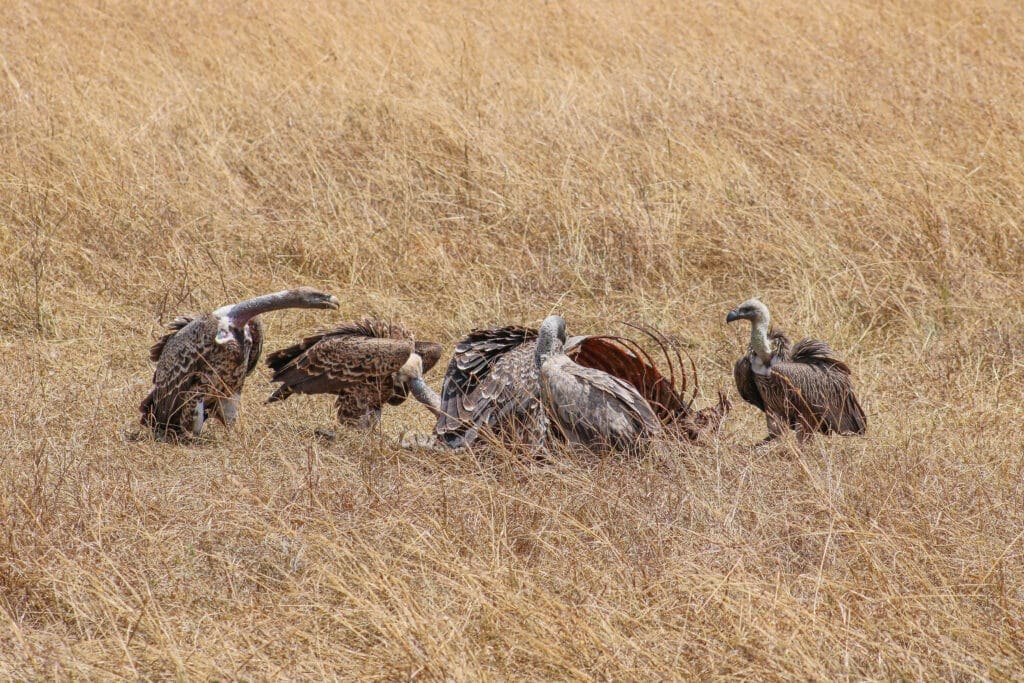
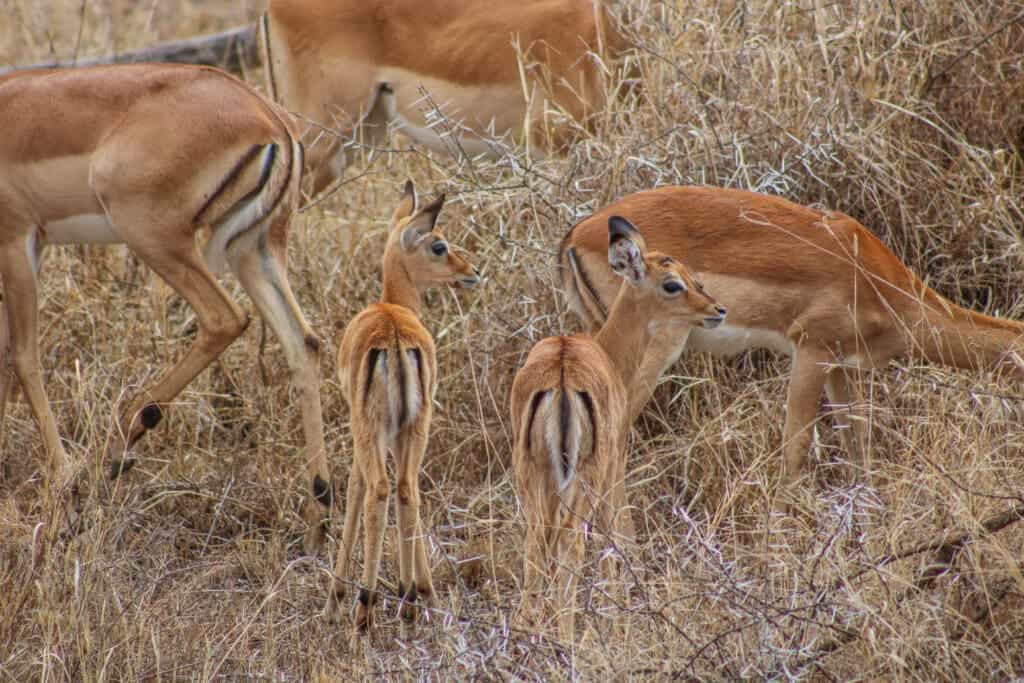
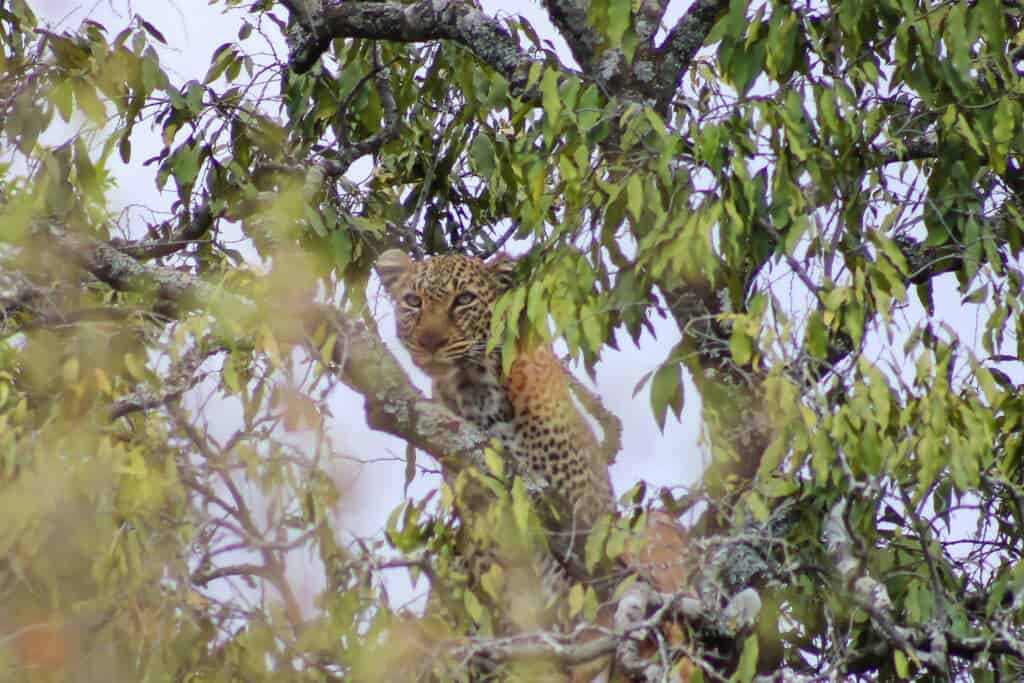
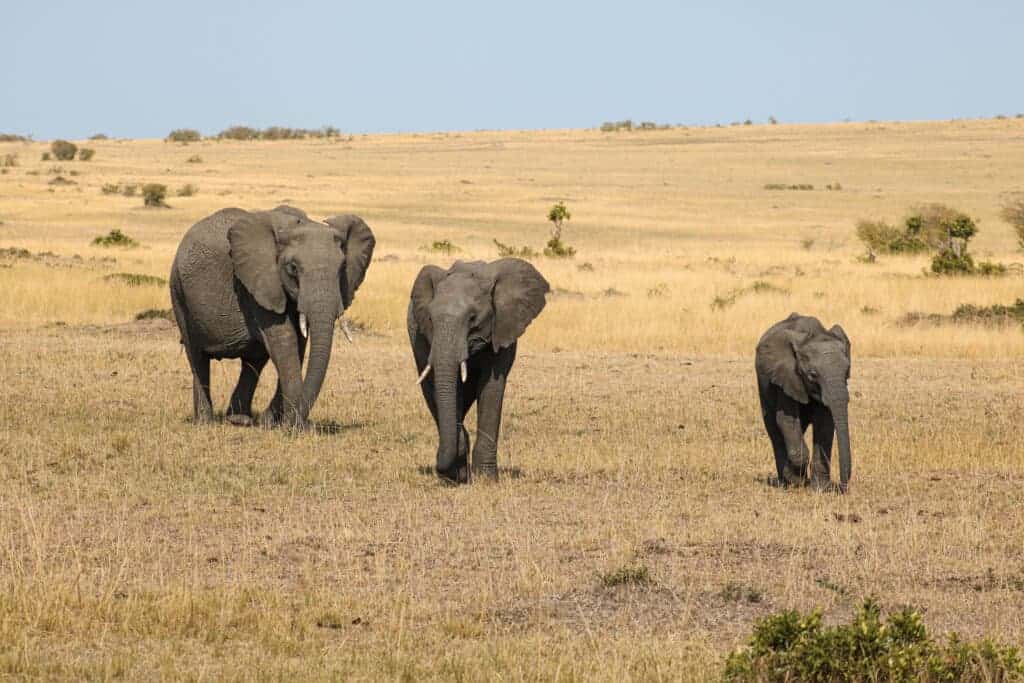
There’s lots of suggestions out there about what type of lens you should have – if you’re a beginner, you don’t need to spend thousands of dollars on a lens (unless you want to). I researched quite a few before my trip and went with a 75 – 300 mm zoom lens, which worked great for my needs. For examples of what I was able to capture, all the pictures in this post were taken with that zoom lens.
Bring lens wipes
It gets extremely dusty on game drives – so it’s super important to make sure your camera’s well protected and cleared of dust. I use the ClearWipe lens cleaner wipes. You may also choose to use a weather cover camera to help protect the camera from the dust.
Pack extra batteries
While most camps and lodges have power supply, I wouldn’t rely on this always working the way you anticipate. I would highly recommend bringing at least one spare battery.
Pack a small bean bag
I found it difficult to stabilitise my camera on multiple occasions. While you’ll often stop for viewing opportunities, there’s still a lot of photos you might be snapping as you drive or even if the vehicle is moving slowly as the roads are very bumpy! A small bean bag like this one or these ones, would be really handy to perch your camera upon windows of the vehicle or out the top of the roof. It’ll also help to protect the camera from smashing against the vehicle over large bumps.
Don’t forget to enjoy the moment
It’s so easy when you’re on safari and you love taking photos to forget to take in the moment through your own eyes. Remember to take some moments just to sit and enjoy what you’re experiencing – you’ll see some truly incredible sights.
Tips for expectations
Game drives times
Majority of the game drives taken place in the morning and then mid-afternoon. Games drives can last anywhere between 2 – 4 hours.
Seeing the Big 5
It’s completely expected to be hopeful to see the Big 5 (elephant, spotted leopard, buffalo, lion and rhino) on your safari trip! However, I think it’s super important not to get your hopes up as some of the five are more elusive than others (spotted leopard and rhino), and absolutely no sighting is guaranteed! It’s all about being in the right place at the right time, with a bit of luck on your side.
I hope that you find these safari tips helpful. If you did, you might also want to check out this post on what you need to double check before you go on a trip. I also have written the following posts on safari trips in East Africa:
- Exploring the East Africa Highlights: Kenya and Tanzania with Intrepid Review
- What to pack for an African safari in Kenya and Tanzania
- What to wear on safari in Kenya and Tanzania
- 8 money tips you NEED to know for Kenya and Tanzania
- A complete breakdown of costs for my trip to Kenya and Tanzania
- How one oversight with the Kenyan eVisa almost cost my trip to Kenya
- Feed the world’s tallest animal at the Giraffe Centre in Nairobi
Looking for safari tips and tricks for something specific that I didn’t mention?
Please feel free to get in touch with any questions in the comments below and I will do my best to answer your queries or provide any additional safari tips you’re after. You can also send me a private message via my contact page.

This was seriously so helpful! I’m in the beginning stages of planning our trip and really have no idea where to start. I had no idea that about wearing certain hues or needing to get some vaccines before we go. This has given me a great starting point and I will definitely be referencing your post again. Thanks so much for sharing!
Thanks for your message, and I’m so glad to hear these tips helped you out with your upcoming trip! 🙂